
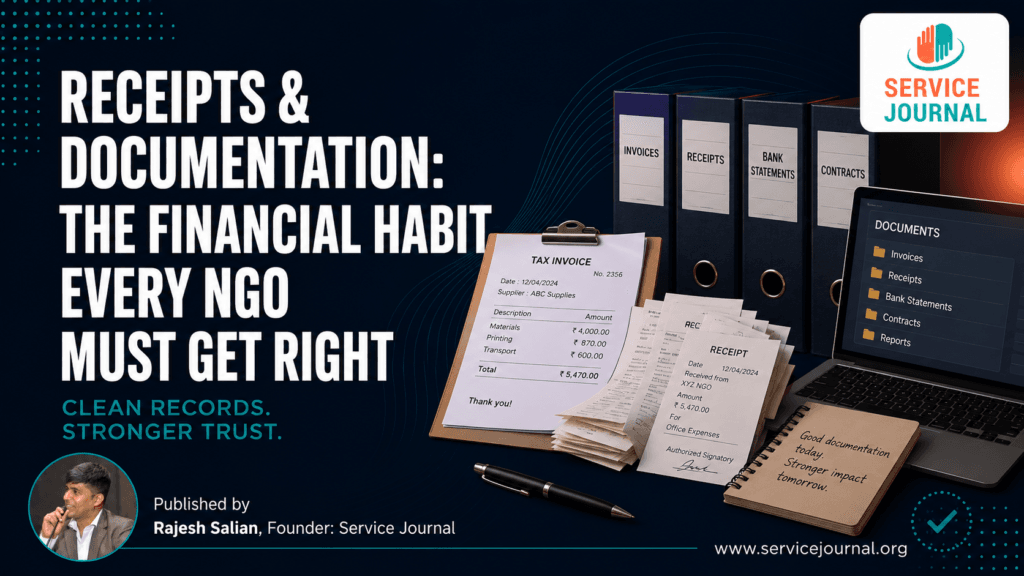
Good financial management is not only about recording how much money comes in and goes out. An NGO should also be able to explain why every transaction happened and provide the documents supporting it.
A simple documentation system can save enormous time during donor reporting, audits and internal reviews.
Start by creating a standard checklist for every expense. Depending on the transaction, the file should contain the invoice or bill, payment approval, payment proof, relevant quotation or purchase order, and any programme-related evidence required by your organisation.
Make every payment traceable
Give each payment voucher or expense record a unique reference number. Use the same reference in your accounting records and digital document folder. This makes it easier to move from an accounting entry to its supporting documents.
Capture the purpose, not just the amount
An invoice may tell you what was purchased, but not necessarily why. Add a short description such as “Printing of 500 awareness leaflets for Project A”. Clear descriptions help trustees, auditors and donors understand expenses without repeatedly asking the programme team.
Create a digital filing structure
Do not depend entirely on paper files. Scan important documents and organise them by financial year, project and month. Use consistent filenames such as:
ProjectA_Printing_Invoice_15Aug2026
Restrict access appropriately and maintain regular backups.
Review documents before closing the month
Every month, compare accounting entries with bank transactions and supporting documents. Flag missing invoices, unsigned approvals, unexplained advances or incomplete vendor information immediately. Finding a missing document after several months is much harder.
Finally, assign responsibility. Programme teams should submit supporting documents promptly, while the finance team should verify completeness before filing them.
Good documentation does more than prepare an NGO for an audit. It creates institutional memory, improves donor reporting and demonstrates that resources are being managed responsibly.
Service Journal enables NGOs to document and showcase their impact stories, helping good work gain greater visibility. Strong financial records add credibility to the impact you communicate.
This article is educational guidance; documentation requirements can vary by transaction, donor agreement and applicable law. Seek professional accounting or tax advice where required.